 The University of Arizona Press

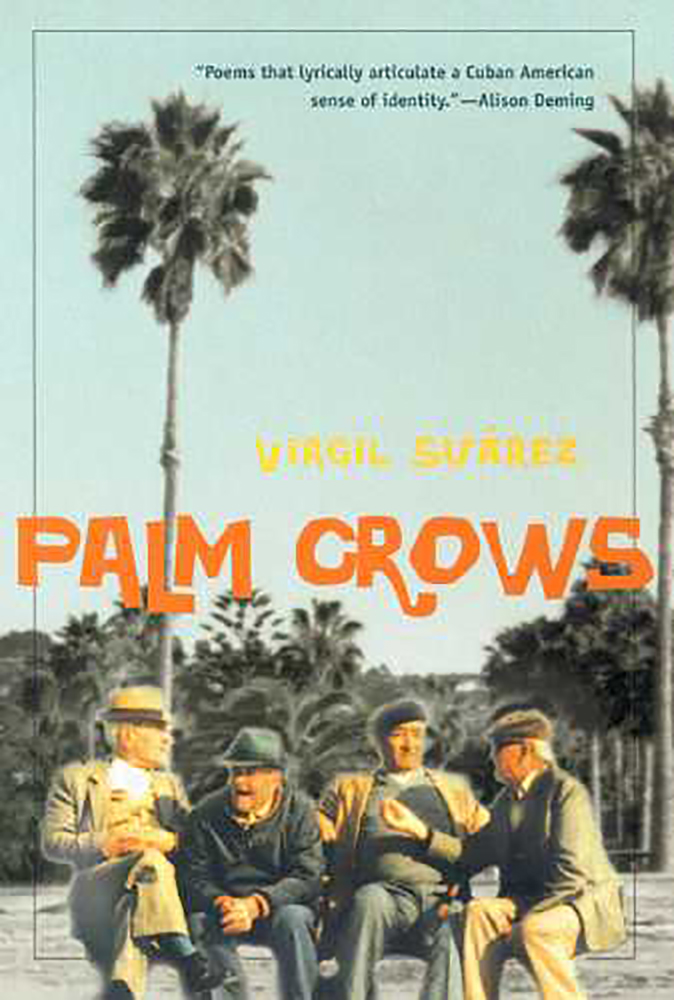
Palm Crows
Paperback ($18.00)
Buy
Hibiscus, banyan trees, and royal palms. Mango jam, white slices of sugarcane, and oxtail stew. Childhood games with fireflies and snail shells. These are images of a Cuba that many remember and others have never known, captured here in the powerful poems of Virgil Suárez.
Born in Havana in the wake of the Cuban Revolution, Suárez is now one of more than a million Cubans living in the United States. In Palm Crows Suárez offers a compelling canción of loss, longing, and memory as he explores the meaning of exile. In poems that range from playful and fantastic to elegiac and meditative, he writes about “the in-betweenness of spirit” of those who have left their home and must try to forge a new one in the United States.
Palm Crows shows us an almost mythical Cuba, offering a compelling testament both to the immigrant experience and to our own search for home.
Born in Havana in the wake of the Cuban Revolution, Suárez is now one of more than a million Cubans living in the United States. In Palm Crows Suárez offers a compelling canción of loss, longing, and memory as he explores the meaning of exile. In poems that range from playful and fantastic to elegiac and meditative, he writes about “the in-betweenness of spirit” of those who have left their home and must try to forge a new one in the United States.
Palm Crows shows us an almost mythical Cuba, offering a compelling testament both to the immigrant experience and to our own search for home.
"An oracle fo exile, memory, and fury." —Juan Felipe Herrera
"This book of accessible poems not only shows what it feels like to be a Cuban American but probes beneath the memories of white Cuban beaches and finds the spirit of the exile experience." —Hispanic Magazine
"Suárez's mini-memoirs read like a photo album of verse, one which seems instantly familiar. . . . The accessibility of these poems should make them attractive to After Night Falls fans and others looking for representations of Cuba." —Publishers Weekly
"Poignant, vividly descriptive poems that capture the longing, regret, resignation, and identity-quest characteristic of the vast number of immigrants who have mixed emotions about their exile from their homeland." —World Literature Today
"This book of accessible poems not only shows what it feels like to be a Cuban American but probes beneath the memories of white Cuban beaches and finds the spirit of the exile experience." —Hispanic Magazine
"Suárez's mini-memoirs read like a photo album of verse, one which seems instantly familiar. . . . The accessibility of these poems should make them attractive to After Night Falls fans and others looking for representations of Cuba." —Publishers Weekly
"Poignant, vividly descriptive poems that capture the longing, regret, resignation, and identity-quest characteristic of the vast number of immigrants who have mixed emotions about their exile from their homeland." —World Literature Today
89 Pages
6.125 x 9 x 0.4
Published: July 2001Paperback ISBN: 9780816520992