The University of Arizona Press

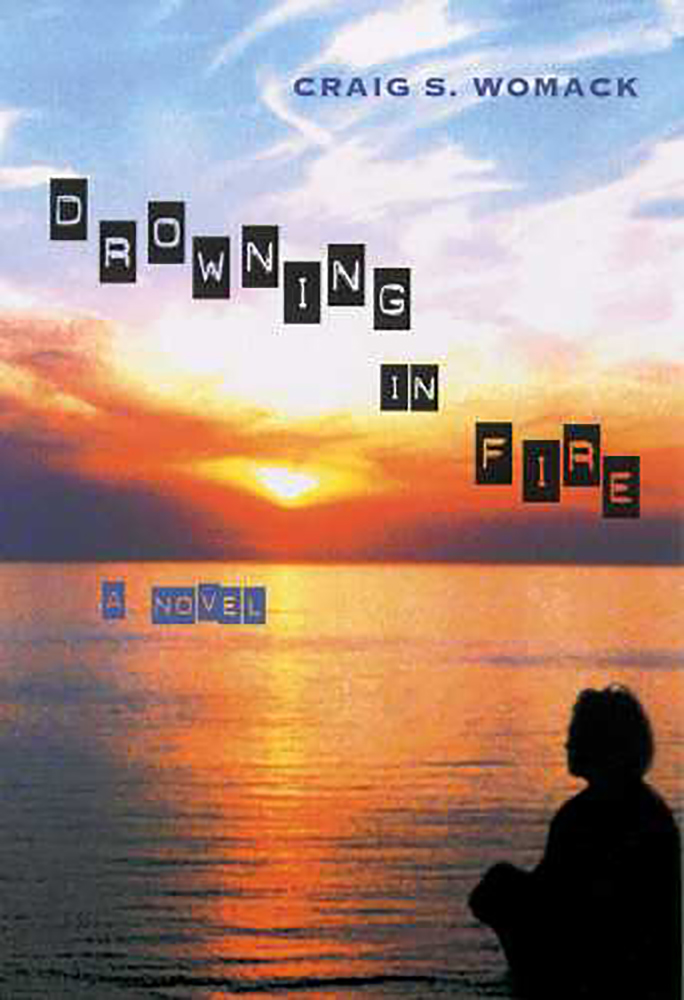
Drowning in Fire
Josh Henneha has always been a traveler, drowning in dreams, burning with desires.
As a young boy growing up within the Muskogee Creek Nation in rural Oklahoma, Josh experiences a yearning for something he cannot tame. Quiet and skinny and shy, he feels out of place, at once inflamed and ashamed by his attraction to other boys. Driven by a need to understand himself and his history, Josh struggles to reconcile the conflicting voices he hears—from the messages of sin and scorn of the non-Indian Christian churches his parents attend in order to assimilate, to the powerful stories of his older Creek relatives, which have been the center of his upbringing, memory, and ongoing experience.
In his fevered and passionate dreams, Josh catches a glimpse of something that makes the Muskogee Creek world come alive. Lifted by his great-aunt Lucille’s tales of her own wild girlhood, Josh learns to fly back through time, to relive his people’s history, and uncover a hidden legacy of triumphs and betrayals, ceremonies and secrets he can forge into a new sense of himself.
When as a man, Josh rediscovers the boyhood friend who first stirred his desires, he realizes a transcendent love that helps take him even deeper into the Creek world he has explored all along in his imagination.
Interweaving past and present, history and story, explicit realism and dreamlike visions, Craig Womack’s Drowning in Fire explores a young man’s journey to understand his cultural and sexual identity within a framework drawn from the community of his origins. A groundbreaking and provocative coming-of-age story, Drowning in Fire is a vividly realized novel by an impressive literary talent.
"Womack is as skillful at capturing the gritty textures of an Indian settlement in 1902 as he is at conveying the abstract loneliness of a present-day Oklahoma City gay bar. Seamlessly weaving together past and present, dreams and reality, and populated by a large cast of eccentric, sharply drawn characters, Drowning in Fire is a provocative novel of sexual and cultural identity, filled with the best traits of the people it portrays: wisdom and compassion." —Rain Taxi
"A satisfying and well-written novel. Recommended for most public library collections." —Library Journal
"There is much to praise in Womack's rendering of the uneasy dawning of gay sexuality within the competitive world of teenage boys, the stark reality of small town life and the multiple frustrations of racist and cultural politics, and the sustaining power of storytelling and memory." —Lambda Book Report
"Melding memory and poetic vision, grim conflict and sly humor, Womack provides in this novel a powerful, richly crafted evocation of tribal specificity and same-sex love." —Gay and Lesbian Review
"A review can only praise rather than convey adequately the complexity of the structure and the language—words are seen as objects, mirrors, weapons—and the imagery of fire and water central to the novel. Dozens of critical articles are sure to analyze the artistry of this first novel by a new and distinctive Native American voice." —Southwest Book Views
"Sets the artistic standard for all writers who take seriously the call to give something meaningful back to their communities." —Studies in American Indian Literature
"Drowning in Fire looms like spring thunderclouds on the plains. It sets on the horizons of a new Indian literature and the new American studies as part of an emerging genre of texts that truly evoke the reciprocity between life and land and between past and future." —American Indian Quarterly